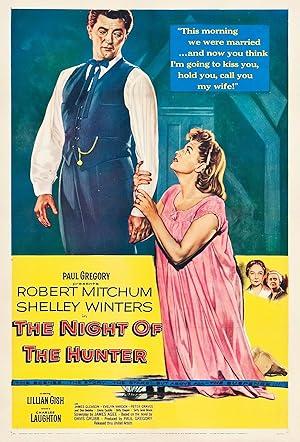
THE NIGHT OF THE HUNTER (1955)
CHARLES LAUGHTON
Thriller1930sClassicsAde TasticsNigel's ChoiceKelly's HeroesHistoricalTango's ChoiceThe Beck-fast ClubRecommendedSouthern Gothic
Plot
Laughton's only stab at directing, with Mitchum giving a stunning performance as the psychopathic preacher who, whilst in jail for a minor offence, hatches a devious plan to get his hands on the loot stashed by his condemned cell-mate. Set in '30s rural America, the film polarises into a struggle between good and evil for the souls of innocent children. Laughton's deliberately old-fashioned direction throws up a startling array of images: an amalgam of Mark Twain-like exteriors (idyllic riverside life) and expressionist interiors, full of moody nighttime shadows. The style reaches its pitch in the extraordinary moonlight flight of the two children downriver, gliding silently in the distance, watched over by animals seen in huge close-up, filling up the foreground of the screen. James Agee's script (faithfully translating Davis Grubb's novel) treads a tight path between humour (it's a surprisingly light film in many ways) and straight suspense, a combination best realised when Gish sits the night out on the porch waiting for Mitchum to attack, and they both sing 'Leaning on the Everlasting Arms' to themselves. Finally, there's the absolute authority of Mitchum's performance - easy, charming, infinitely sinister. “ Without doubt one of Robert Mitchum's finest performances, in a film that still has genuine menace decades after it was made. Indeed, the perils in following charismatic men with easy answers and manichean morals is as relevant now as it ever was. The film tells the story of a journey made by two children, but it is by no means a children's story. It is more a parable of reactions when madness and evil come into a community; who remains clear-eyed, who doesn't, and why it matters.” - review from Neil Jacobs